
Clearer numbers. Better decisions.

Salon service cost and margin calculator

Connect materials, staff time, commission and fees to your service price. See contribution, allocated profit and the price for your target margin.

Start with your numbers

Adjust the example. See what each decision changes.

Enter costs excluding recoverable VAT.

Amount collected, using the selected VAT basis.

Staff time allocated to this service.

Edit the assumptions included below

Details included in your result

Materials and recipe17.5 SAR per service · waste 10%

Exclude recoverable VAT; include it if nonrecoverable.

For example ml; consumption must use the same unit.

Measure the recipe, not the number of packs purchased.

An uplift on measured use; avoid counting waste twice.

Other materials and disposables consumed by this service.

Wages and overhead60 SAR per productive hour

Fixed employment costs ÷ expected productive hours; exclude commission.

Rent and shared expenses ÷ service hours; exclude payroll/materials.

Commission and payment feesCommission 8% · fees 2% + 0 SAR

Variable with sales; do not include it in fixed wages too.

Editable example; use your provider contract. Applied to collected amount.

Allocate a multi-service invoice fee once, not to every service.

Price for your goal20% → 127.87 SAR

Your target on net revenue, not markup on cost.

Try another serviceEditable examples; reset all assumptions
Your numbers stay in your browser
Back to result ↑

Decision guide

Salon service cost and margin calculator

Understand the model, then test your own numbers.

200Revenue excluding VAT
38.10Variable cost
60Allocated wages and overhead
101.90Example profit

Illustrative numbers, not market benchmarks or expected results.

01

What does a service really cost?

Split cost into consumed materials, variable pay/commission, payment fees, then time-based fixed employment cost and overhead. Separate contribution from profit after allocated costs: the former explains coverage of fixed costs, while the latter supports long-term pricing. The calculator example has a SAR 230 VAT-inclusive price and SAR 200 revenue; materials 17.5, commission 16, fees 4.6 and fixed wages/overhead 60. Allocated profit is SAR 101.9. Replace the recipe and duration before applying this illustration to your service.
02

How do I cost consumed materials?

Use consistent units: a 1,000 ml pack costing SAR 100 and 50 ml consumption costs SAR 5. A 10% waste uplift makes it SAR 5.50. Add all other materials and disposables; a whole pack is not the cost of one session. Measure several sessions before fixing a recipe and record variants such as long hair. Exclude recoverable input VAT, but include nonrecoverable tax. In Toptalla, review service consumption and inventory movements instead of relying only on monthly purchases.

03

How do I avoid counting labour twice?

Keep fixed employment costs separate from variable commission. If fixed employment costs are SAR 5,600 and expected productive time is 160 hours, allocate SAR 35 per productive hour. A one-hour service receives SAR 35 plus its commission once. Do not use all rostered hours when a material portion is unproductive. In the monthly profit calculator, place fixed salaries in fixed costs; do not also transfer their allocated hourly cost into variable expenses.

04

How should I allocate shared overhead?

Choose a driver related to use: room time, floor area or practical service hours. SAR 20,000 overhead across 800 service-hours gives SAR 25 per hour. Exclude wages and materials already counted elsewhere. Compare lower and typical utilization to see sensitivity; do not change the allocation basis merely to make a department look profitable. Assigning all rent to the largest department can mislead when that space also supports other services.

05

Margin versus markup: what is the difference?

With SAR 200 revenue excluding VAT and SAR 150 cost, profit is SAR 50. Margin is 50/200=25%; markup is 50/150=33.3%. Writing 25% without naming the measure can produce the wrong price. Keep the basis consistent and specify whether cost means variable cost alone or includes fixed-cost allocation. The calculator shows margin and markup after allocated costs, with contribution separately.

06

How do I set a defensible price floor?

Do not make material coverage your normal floor. Sustainable pricing must cover time, overhead, commission, fees and your target. The calculator solves for the price achieving the entered margin while recalculating price-dependent commission and fees. If percentage costs absorb all revenue, it returns no feasible price. Test a discount against contribution per hour: filling unused capacity differs from discounting a busy slot that could sell at full price.

07

What happens when a service takes longer?

Run the example at 60 then 90 minutes with the same price. With the initial inputs, fixed wages/overhead rise from SAR 60 to SAR 90, reducing allocated profit from 101.9 to 71.9. Materials may rise too. Review contribution per hour and room turnaround. The response might be a more accurate booking duration, a different recipe or a separately priced service variant, rather than asking staff to rush and compromise quality.

Collect these inputs from your salon
ItemWhat to record
ServiceSpecify the service variant and hair length or delivery type.
material unitUse ml with ml, or g with g.
pack costUse documented purchase cost and consistent VAT treatment.
sizeUsable content, not packaging weight.
consumptionMeasure several actual sessions.
wasteAdd waste only if measured consumption excludes it.
minutesSeparate staff time from room time when necessary.
wagesFixed cost / expected productive hours; keep commission separate.
overheadExclude wages/materials counted elsewhere.
Download worksheet ↓
Sources and use

Sources reviewed 14 November 2026. Worked examples prepared by Toptalla. Policy, contracts and costs depend on your business.

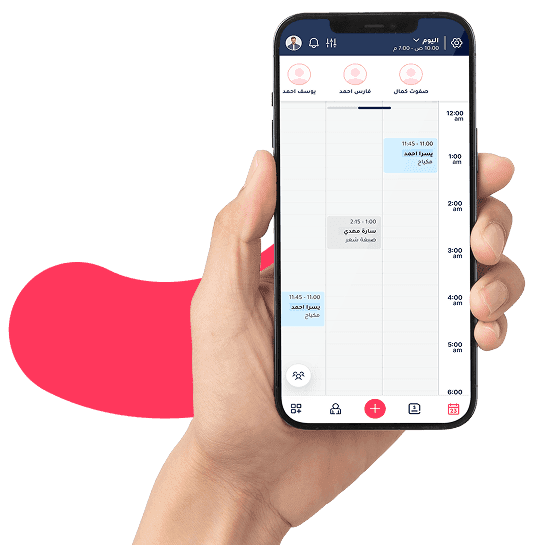
TopTalla Business mobile app

See Toptalla with your own workflow

Try for 14 days with free onboarding and data migration. Review your services, team and available data with us before the move.