
In short
How Saudi salons should separate bridal, treatment, and express services before August bookings pile up
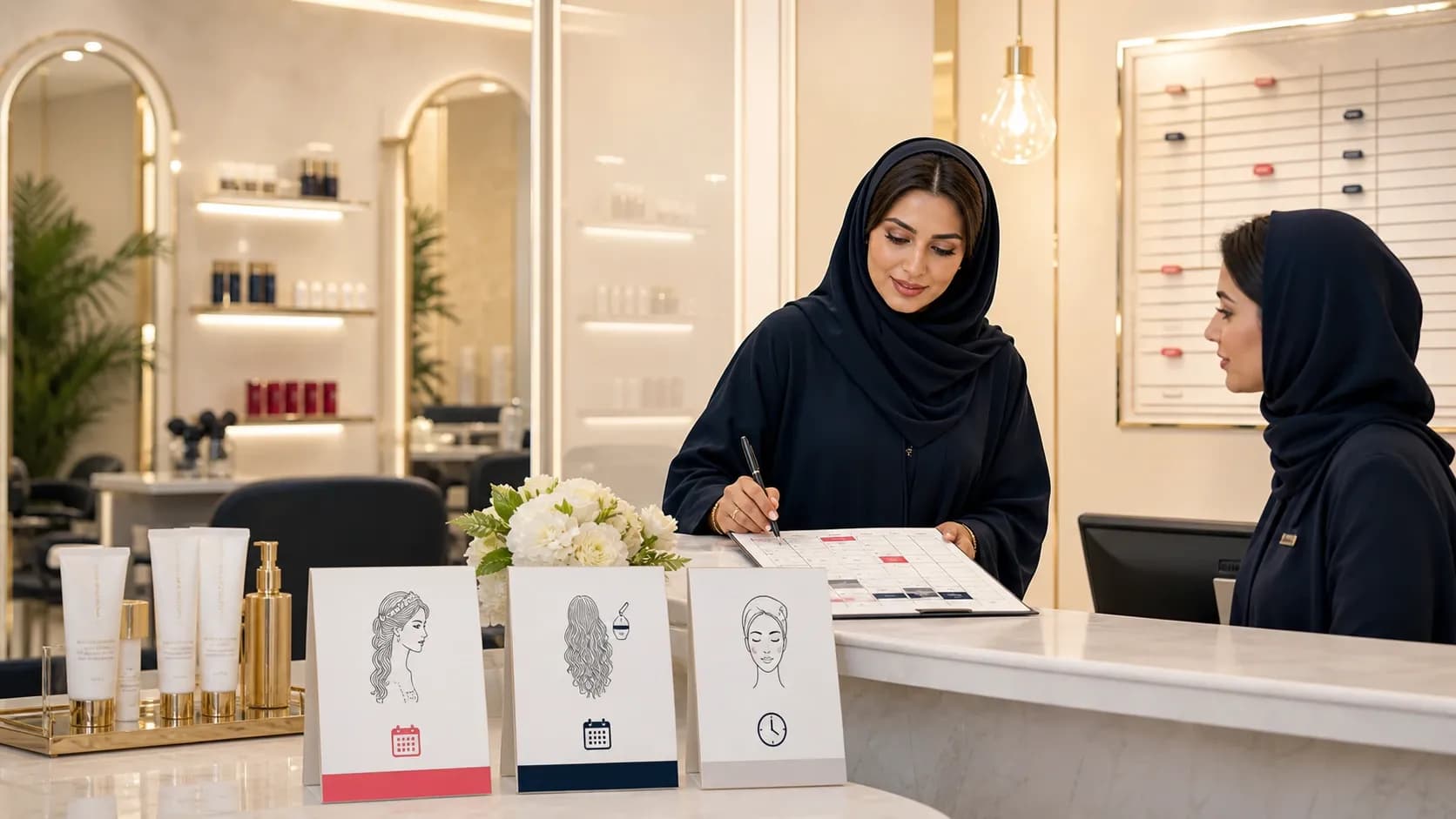
If salon messaging around you this week is pushing bridal prep, glossy hair treatments, and quick pre-event services at the same time, do not hide all of them under one page or one seasonal offer. Separate occasion services, treatment services, and express services on your marketplace and booking pages, because each lane needs a different service time, a different preparation logic, and a different client expectation.
In late July, the problem is not that demand has disappeared. The problem is that several very different demand types are active at once. The official Visit Saudi calendar still shows summer activity across the country, and the Summer Your Way campaign is still promoting seasonal movement, travel, and outings. At the same time, visible salon chatter this month is not speaking with one message. Public posts are leaning into wedding-ready styling, gloss and treatment services, and polished quick-prep appointments. If an owner answers that moment with one broad “summer services” card or one generic seasonal offer, the confusion lands first on the front desk and the calendar.
The important point is that clients do not always browse the way salons write their menus. On current public Toptalla Marketplace pages, women’s hair styling appears as a different discovery path from hair treatment and care, and the styling pages themselves show how different the service intents already are. Some visible services are only 10 minutes. Others run 30 minutes or longer. Others are clearly event-led, like bridal styling, with a very different value and preparation profile. That does not prove how much of the market each service will win next week, but it does show something operationally useful: clients are already browsing by service intent, not by a generic seasonal slogan.
Where the mix-up starts inside the salon
The problem begins when bridal styling, treatment work, and quick-fix services sit on the same page in the same language with the same booking friction. A bridal or occasion hairstyle needs protected time, often a particular staff member, and sometimes additional coordination. A gloss or repair treatment needs a clearer explanation of outcome, service length, and when it is appropriate after travel, sun exposure, or color. A fast service such as a blow-dry, retouch, or short polish visit needs the opposite: a lighter path, a visible duration, and a booking flow that does not force the client into too much back-and-forth.
If all of that remains bundled under a card such as “summer package” or “event services,” the issue is not just marketing clarity. The team itself loses a clean starting point. Reception has to diagnose the visit manually, the client waits longer for answers, and the higher-value service starts competing for the same real estate as the easiest short visit. That is why the structure of a marketplace page or booking page is now an operating decision as much as a discovery decision.
Build three booking lanes instead of one crowded menu
The first lane is bridal and occasion services. These should be labeled clearly enough that the reader immediately understands the time, value, and preparation level involved. If the appointment needs a specific staff member, more lead time, or a quick confirmation step, that should be visible before the booking attempt starts. Do not treat a bridal hairstyle like a ten-minute express slot.
The second lane is treatment, recovery, or gloss services. These perform better when the page explains the reason the service matters now: post-travel refresh, post-sun recovery, hydration, shine restoration, or a controlled care visit. The client here is not only buying a name. She is trying to understand whether the service fits the condition of her hair and her timing. Keeping that lane separate inside the service catalog or on the marketplace flow reduces front-desk confusion and makes the comparison cleaner.
The third lane is express or fast-book services. This lane should win on clarity and speed, not only on price. If the service is short, such as a blow-dry, retouch, or a quick beauty finish before an event, it should be reachable through a direct booking link or a very clear online booking path. Express services should not steal the hours needed for higher-value appointments, but they also should not disappear inside a page that treats a fifteen-minute visit and a sixty-minute visit as if they were the same job.
How this protects the calendar instead of only improving copy
Once those lanes are separated, owners can protect evening and weekend capacity for higher-value services instead of letting short easy-to-book visits consume the same windows. Treatment visits can be pushed toward the periods that fit them better, often midweek or quieter blocks that still need commercially sensible demand. Express services can then become a cleaner way to fill short gaps without distorting the rest of the day.
This also makes smart packages more useful. A package does not need to be one oversized seasonal basket. It should belong to one lane: an occasion package, a treatment package, or a short upgrade attached to an express visit. That keeps the offer understandable for the client, easier to recommend for the team, and less chaotic for the calendar.
What the service page itself should say
Separating the lanes by label is not enough. Each service still needs at least four visible answers: what problem it addresses, how long it takes, when it suits the client, and what the next step is if this is not the right service. If the visit is bridal, say that it needs time and coordination. If it is treatment-led, explain the condition it is built for. If it is express, say clearly that it is designed for quick booking or same-day convenience only if that is actually true. That clarity reduces manual messages and stops the client from feeling that she entered a crowded page only to be asked to explain everything again.
That is also what makes this article different from older library pieces such as a ready salon website that brings real bookings or how salons can sell more through WhatsApp marketing. Those pages are about channel presence more broadly. This one answers a narrower and more urgent question for this week’s demand window: how should owners structure the services themselves so the booking path stays clear when bridal intent and quick-care intent are colliding?
The practical takeaway before August starts stacking pressure
If the current market signals show bridal demand, hair-shine treatments, and quick-prep services all active at once, the right response is not a clever umbrella label. The right response is to separate booking intent before the pressure forces a messy version of that separation on the team. Rework the marketplace page, make the lanes obvious, protect the higher-value time, and make the fast service easier to book instead of more confusing to interpret. That is how a salon enters August with a clearer service page instead of a louder but weaker seasonal offer.
The fast operating takeaway
- Clients arrive through a service intent, not a seasonal headlineIf the client intent is bridal, treatment-led, or express, that difference should be visible on the first page rather than after a manual message exchange.
- Longer services need protected timeBridal or preparation-heavy services should not compete with short visits under the same booking logic.
- Express services win on clarity, not only on discountingThe clearer and faster the express booking path becomes, the less pressure the front desk absorbs and the more likely the visit is to convert.
Five steps before August pressure starts building
Start with the service page itself before you start with the ad.
Audit the current menu the way a client sees it
Check whether bridal, treatment, and express visits still look like one bucket or like three clear lanes.
Separate the service by booking intent
Create one lane for occasion services, one for care or treatment, and one for fast-bookable short visits.
Give each lane a duration and a booking rule
If the service needs protected time, a specific staff member, or a faster confirmation step, make that visible before the booking starts.
Make the fast lane easier without damaging the calendar
Express services need a shorter booking path or direct link while the higher-value hours remain protected.
Review demand weekly and adjust early
If treatment demand starts outpacing styling or the reverse, adjust the page structure and offer logic before the team normalizes the confusion.
Checklist before you approve the page
If the answers are still vague here, reception will end up explaining instead of directing.
0/3
Important warning
Do not let one broad seasonal label eat your highest-value hours
If weekends or evenings are your strongest window for occasion services, do not open them to short fast-book visits without distinction. Page clarity protects margin before it protects marketing.
Next step
Structure service discovery inside the marketplace before pressure structures it for you
If you want clients to understand the difference between occasion, treatment, and express services from the first page, start by structuring how those services appear and book inside the marketplace and catalog.